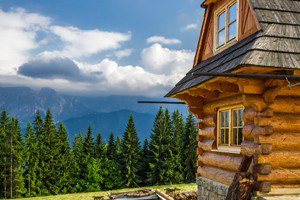


- The Big Horn Mountains and Forest are found in the northern portion of Wyoming approximately 280 miles southeast of Bozeman.
- This region offers great outdoor recreational opportunities year round.
- Like most national forests, mountains and grasslands, the Big Horn Mountains are open, free of charge, for your use and enjoyment.
Overview
The Bighorn Mountains contain the Cloud Peak Wilderness Area. Within the 189,000 acres of wilderness are excellent backpacking, hiking, and sight seeing opportunities. The peaks range in elevations from 8,500 to 13,165 feet. You are sure to find a vista that pleases you. There are also about 19 maintained campgrounds in the Bighorns, all with close proximity to excellent fly-fishing and spin-casting lakes and streams.
Hours/Seasons
The Big Horn Mountains welcome visitors year-round. Great powder in the winter creates a majestic winter wonderland. The fantastic summer with mild temperatures beckons all manner of outdoor enthusiasts.
Fees
Most National Forests and Grasslands and Mountains, including the Bighorn, are open, free of charge, for your use and enjoyment. Fees may be charged and permits required for some activities and locations. Business permittees, such as campground concessionaires and outfitter guides, may provide services to public land users.
Contact
USDA Forest Service
Bighorn National Forest
2013 Eastside 2nd Street
Sheridan, WY 82801
307-674-2600
Highlights
The Big Horn Mountains and Forest has 32 campgrounds(maintained and unmaintained), 14 picnic areas, 2 visitor centers, 2 ski areas, 7 lodges, 2 recreation lakes, 3 Scenic Byways and over 1,500 miles of trails.
The Medicine Wheel
The Medicine Wheel is a circular alignment of rocks that spans a diameter of 75 feet. There are 28 rows of stones radiating from a cairn in the center of the circle. Six smaller cairns are placed in regular intervals around the edge of the circle.
The Medicine Wheel was made a Nation Monument in 1957. Native Americans use this area as a place for vision quests, prayers, and inspiration.
Hole in the Wall Country
The legendary area near Kaycee, Wyoming where Butch Cassidy and the Sundance Kid hid from the law.
Cloud Peak Scenic Skyway
The Cloud Peak Scenic Skyway, U.S. Highway 16 from Buffalo, Wyoming is the fastest, safest and most scenic route to Yellowstone National Park over the Big Horn Mountains. The Cloud Peak Scenic Skyway traverses the southern Big Horn Mountains and offers breathtaking vistas of the snowcapped peaks of the Big Horns along its 45 mile length.
Getting Here
There are several scenic byways, which pass through the Bighorn National Forest and the Big Horn Mountains, all of which provide the traveler with scenic driving.
The Bighorn Scenic Byway (US 14) connects the cities of Sheridan and Greybull and includes 45 miles of scenic mountain driving.
The Cloud Peak Skyway (US 16), connecting the city of Buffalo and the town of Tensleep, crosses the southern Bighorn National Forest and offers breathtaking views of snow-capped peaks along its 45 mile length.
The Medicine Wheel Passage (US 14A) rises sharply from the Bighorn Basin near the city of Lovell and travels 25 miles through high alpine meadows to Burgess Junction, where it intersects with the Bighorn Scenic Byway.
To travel to Bozeman, MT from this area you will need to proceed north and then west along I-90 a distance of nearly 280 miles.